
My Adventure Into White Pocket
Sometime in the past 220 million years a group of fairy’s came down to a lone speck of desert and decided to make ice cream. After they had finished their creation of swirls, God looked upon their creation and decided it would make for a great art installation. So he took the landscape as if it were a giant etch-a-sketch and shook it and then left it as stone.
After God’s shake up had been finished he let the Wind and Rain work on his creation to see what they could do. Over the eons they carefully sculpted hoodoos and hay stacks made of fairy ice cream. To help beautify the landscape the winds settled dust down within the cracks and crevices and invited Mother Nature to plant her seeds within the earth to bring plant life to the landscape.
Mother Nature in the mean time began sculpting man in the image of God as they were lovers and began spreading them across the lands with the help of Wind and Rain. Rain brought rivers across the landscape as waterways for man to travel. Wind blew at the back of men encouraging them to go further and seek and see.
“See what we have made” the wind would say quietly into the ear of man.
And man listened.
White Pocket
I have been to White Pocket a total of 4 times. One time ended without a single image taken due to a swarm of wasps that made staying at the location dangerous for me. That makes three attempts to photograph the landscape. Three attempts to see it in a variety of light and three trips to know that this area is painfully difficult to photograph.
Seriously, this is one of the hardest landscape to photograph. It sits on the edge of too much to take in and how much creativity do you have. Apparently I have enough creativity to take a few images and not enough to make 200 images in a single trip.
I guess that makes me human pushed by the wind to explore a bit more doesn’t it.
The road to White Pocket is a road that loves to eat the unprepared. Though most of it isn’t that bad, it holds truly amazing spots of terror if you are a Corolla. Deep sand is a constant friend out here and if you are un-prepared you will find yourself up to your axels in sand in a blink of an eye. On my second trip out there, someone had made it in a Subaru. On my last trip, an Outback would have been good until the last 100 yards then the road would have devoured the car. Residing within the road were two to three sets of huge deep ruts where someone had gotten stuck and dug themselves in to their axels. No moderate clearance vehicle would get past those drops.
The trail is sandy, and the rock is swirly. There is not much more to say than that. This is a place of exploration not a landscape of trail guides. If you want to know, there is a hoodoo to the north side of the landscape and to the south. There are white rocks up top and red rocks below. To the right is swirls, to the left are trees and roaming hills. The entire place fits within a football field or two.
There that’s your guide to White Pocket. Now stop looking for such non-sense and just go see it. Below is my experience.
Day 1
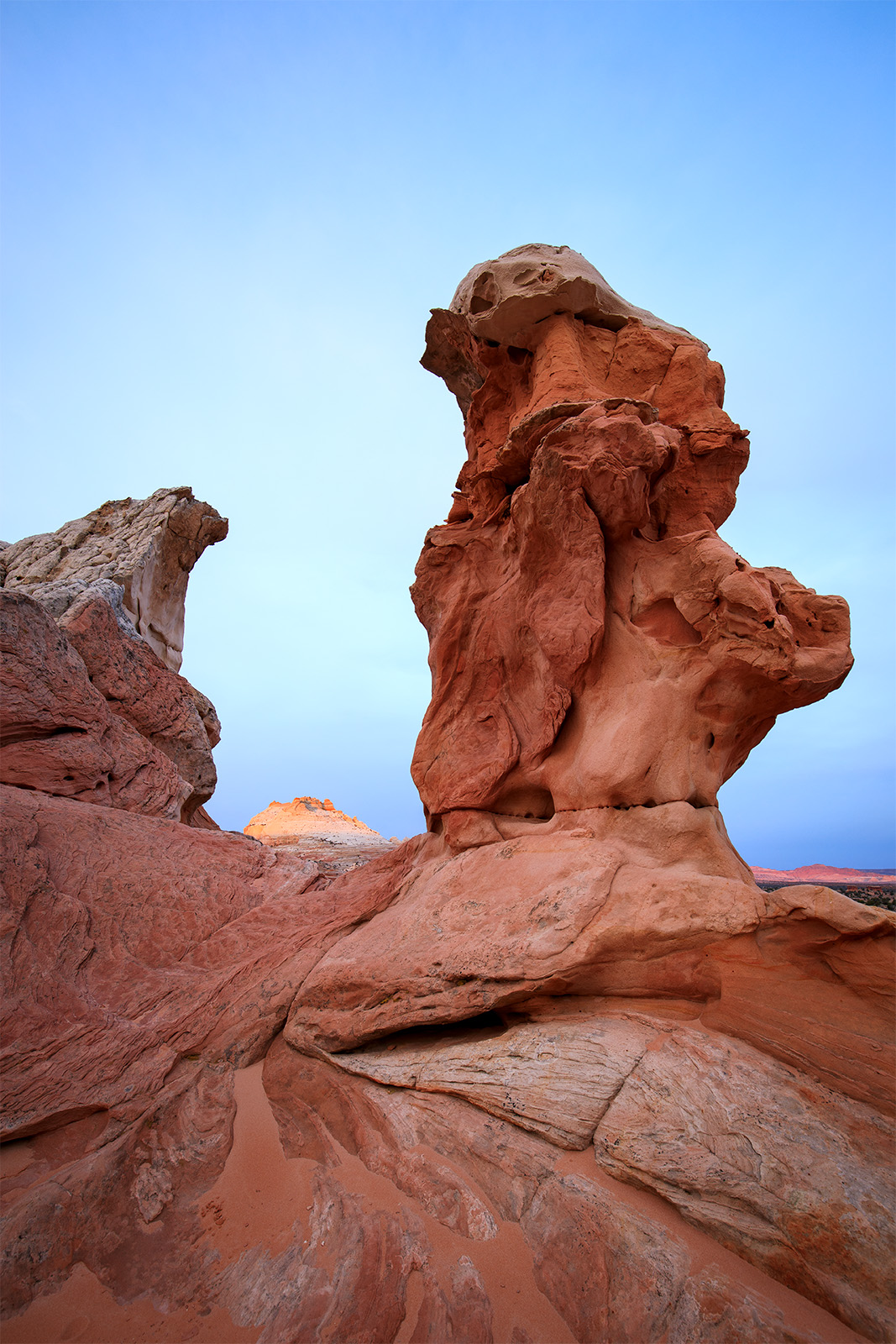
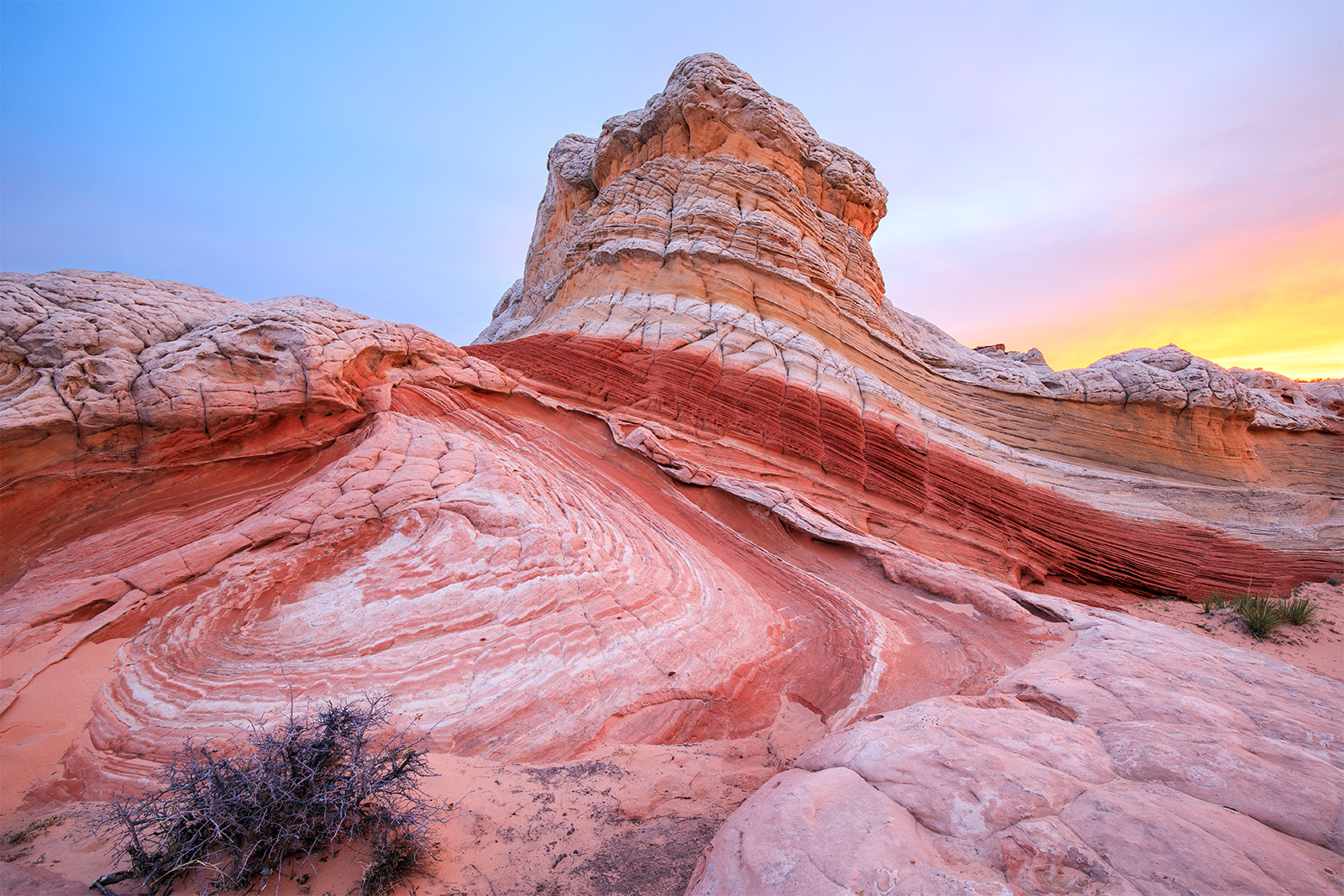
On my first attempt at photographing White Pocket I explored and spent one evening with one other photographer. I was able to create three of four images. You will see two.
White Pocket sits in the middle of nowhere it is fundamentally a perfect place for night photography as long as you can get out there and don’t get lost. On my first trip I took a total of two night images Both sucked. In the end I think White Pocket is good for Blue Hour Blends not so good for low level lighting. Due to the texture, too many shadows of distraction are created across the landscape.
Its safe to say I botched all the night shots and got these shots at sunrise.
Day 2
On my second trip out to this location about two weeks later, I had a bit more experience and was able to create a grand total of one image. On this trip I was with about 6 other photographers from across the country. It wasn’t a workshop, we just happened to get there at the same time.
We attempted a bunch of low level lighting stuff. In the end, they kind of all came out mid tear. I settled on one image for the entire trip. Literally, a landscape of wonders and I got one image.
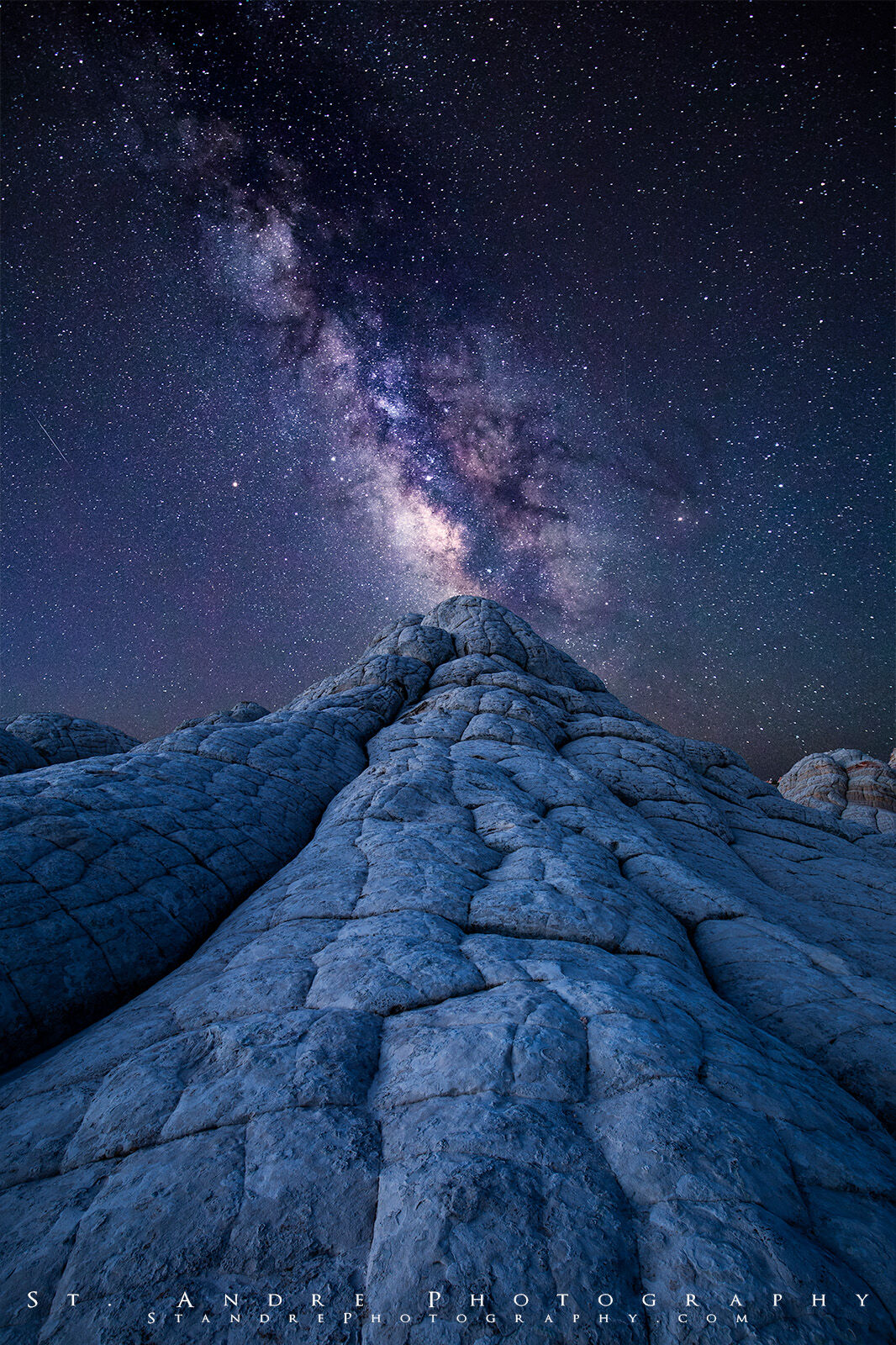
The large domes of white pocket are a stunning sight to see but are very challenging to photograph. Then do that at night. Thus the image above.
Day 3
Skipping the failed trip, this past June was my third trip into White Pocket. For this adventure I brought my family. No photographers other than me. This meant I had the entire place to myself except the tour groups in the area. A minor nuisance that is easily cloned out.
Our adventure of course began with wasps and the threat of a wildfire. Currently the state of Utah burns. The fires began in June and during out entire drive a distant cloud of ash and smoke was apparent on the horizon to the north west. When we turned down House Rock Road there was a sign that read “road closed ahead due to wildfire” reminding us of the ever present danger.
I don’t love having to plan in the back of my head an escape route or where I would drive to avoid flames, but good scouts do that when confronted with danger.
So I planned and drove further into the wilderness.
The Photography
Over the past 6 months I have been overwhelmed. On this trip I stopped and said to myself “just enjoy this” and photograph what catches your interest.
So I wandered and explored.
Recently I had seen a video from Nicholas Warner, a local landscape photographer to Kanab, Utah. I really like his style. It is not my personal flavor of photography that I try to emulate, but it hails back to the days of Ryan Dyar and Ted Gore… Anyways Nicholas has this video on composition that I recommend
He spoke about the few fundamental compositions seen in much of landscape photography. One of the compositions I almost never use is framing. But since I had recently seen that video, I figured on this trip I would go about doing some framing as a practice of technique more than a need.
Here is how the evening photoshoot went though.
Step 1- wander through 1/2 of the region and mark about 4 different shots I want to do.
Step 2- Determine which images I want to get and in which order.
- Image 1- A repeat of an older composition.
- Image 2- A framed composition that highlight a cool distant structure with leading lines.
- Image 3- Work my way south towards the trailhead utilizing the interesting ground textures.
- Image 4- Return to the south towards the tree and see if anything over there catches my attention and try to align the clouds with ground elements.
Step 3- wait
Image 1
I had really mixed feeling about redoing this shot. I do like revisiting shots and trying to do a better job or get something different. You can see the first shoot above in this article. The image below is the sunset version of this image.
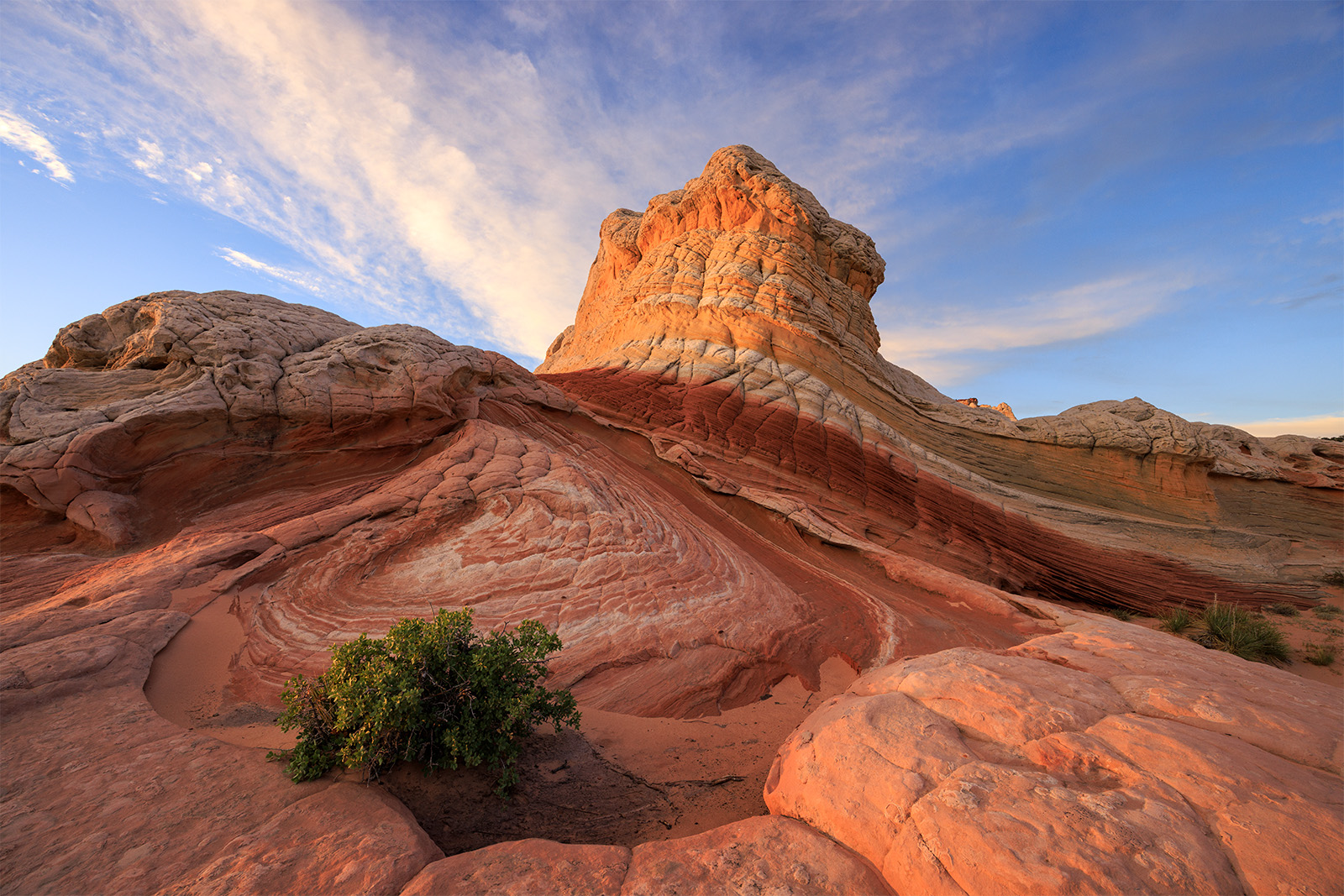
Image 2
This is the image I that was going to utilize the framing composition technique. For this image, I really wanted the lines to do the work where they would lead the eyes towards the distance. The hay stacks were the frames and their overall structure would highlight the distant rock formations. Luckily the clouds were really beginning to pop off for this image. I did a vertical and a horizontal composition.
Which one do you like best?
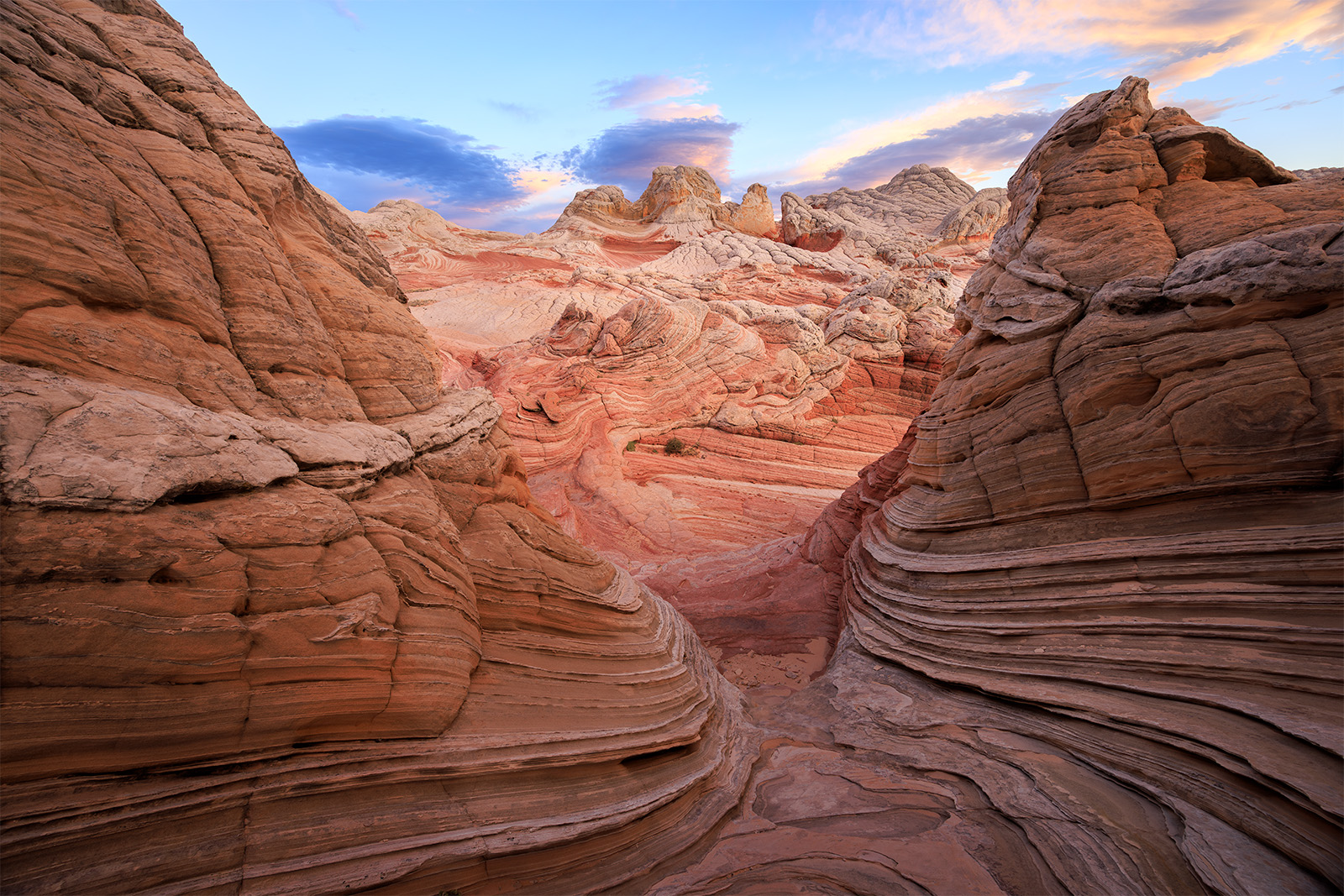
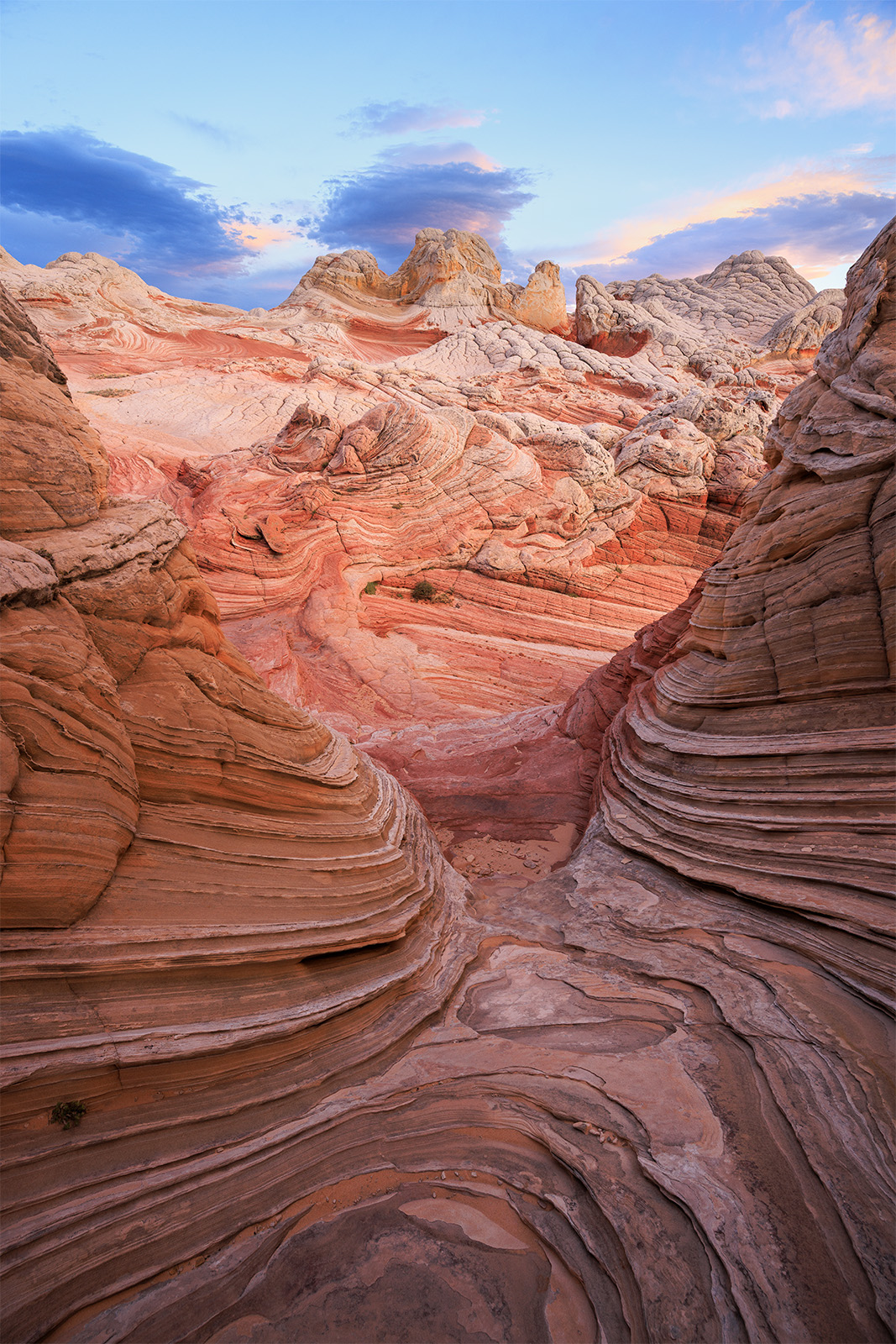
Image 3
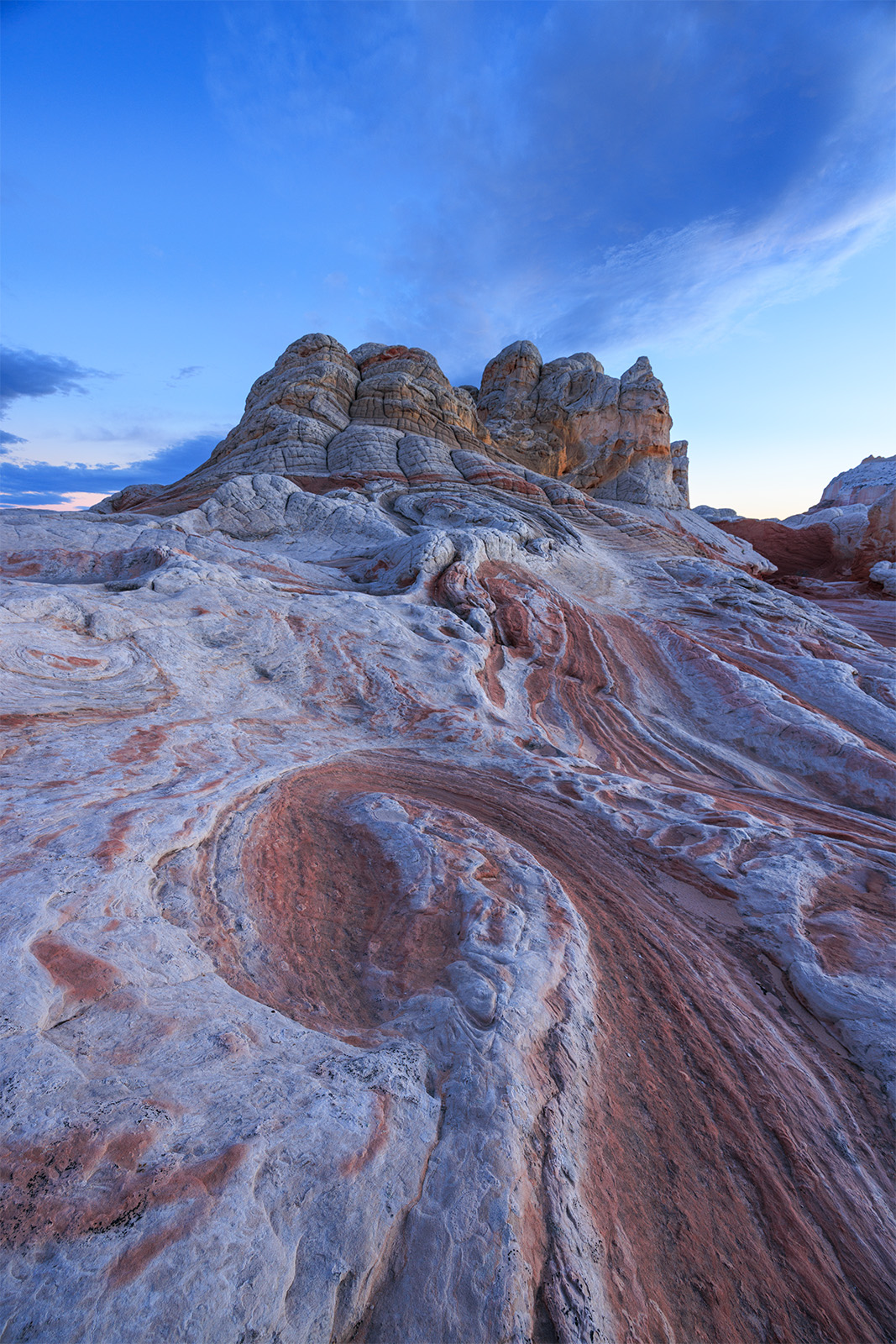
I had seen this swirl while I was first walking by earlier in the day while scouting compositions. I really liked it but it was not the right time. I don’t think this will be the final time I photograph this spot though. I feel like I want to catch this at full sunset with full color in the sky to match the scene. Though the cloud is stunning, its not the type of shot that I’m fully drawn to.
There is no image 4. There was another image or two after this image. But I don’t love them. Maybe I will share them in the future but for right now, they are going to live on a hard drive.